{{current_date_full}}

Hi {{first_name}},
A few months ago, one thing became crystal clear to us.
College athletic departments need our help.
The programs are currently between a rock and a hard place for funding. They need money, and the private equity vultures are circling — ready to cash in and destroy the sports we know and love.
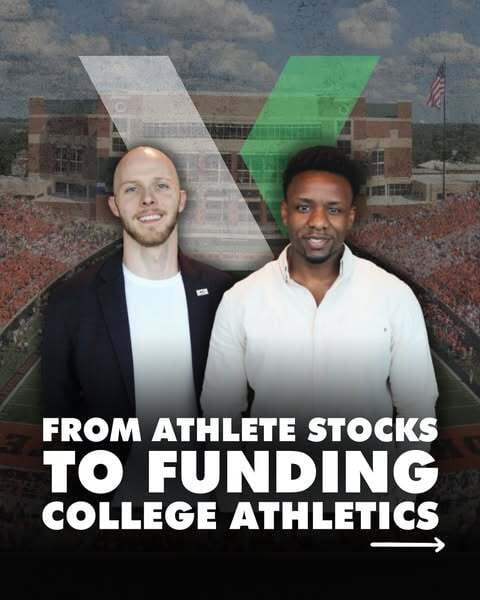
Rather than sit idly and let them take over, we built a solution. We are partnering with athletic departments to allow fans to invest directly into the programs they know and love — keeping the teams with the people who have been there all along.
This is the future of Vestible and the future of fandom. It’s time to own it.
Scroll to find out more and follow us on instagram to keep up with all the exciting things to come!
— Avery Glover
Current Offerings:

Vestible launches regulated platform to help college athletic departments raise equity capital

Vestible, a tech platform helping college athletic departments raise equity capital, has launched the first regulated model that allows schools to convert future revenues into upfront investment — without debt, private equity, or donor dependency. The capital comes from a powerful but untapped source: fans, donors, and alumni who now have the opportunity to invest directly in the programs they support. As costs soar across facilities, NIL infrastructure, staffing, and recruiting, athletic departments are being forced to navigate a widening funding gap. Traditional tools — one-time donations, expensive debt, or strategic partners with operational strings attached — don't scale for what's next. Vestible's solution: a perpetual, transparent structure that raises capital without sacrificing control. |
23 Power Four GMs back collective bargaining in closed-door Athletes.Org meeting

On Sunday night in Nashville, 23 Power Four general managers met with Athletes.Org leaders to discuss the future of collective bargaining in college athletics. The group unanimously agreed that collective bargaining is the best path forward, supporting measures like removing the transfer portal window during the season and implementing performance-based incentives. They also endorsed formal certification and registration of agents. This meeting marks a rare, open conversation on a traditionally taboo topic, signaling a growing consensus among key stakeholders that collective bargaining could help stabilize and evolve the college sports ecosystem. |
After the House v. NCAA Settlement: Will college athletes be able to gain real power by 2035?

The House v. NCAA settlement has ushered in a new era of revenue sharing and reform in college athletics, but legal, political, and operational challenges remain. Tennessee AD Danny White proposes a novel collective bargaining model where players are employed by a national entity rather than universities, allowing negotiation of salary caps, benefits, and transfer rules without employee status at schools. While some power brokers and player advocates back collective bargaining as a solution to ongoing chaos, others—including many players—express hesitation about unionization. Meanwhile, federal legislation such as the NCAA-backed SCORE Act and competing bills complicate the landscape. The article highlights tensions between tradition, player rights, legal battles, and evolving market forces, suggesting collective bargaining may become inevitable as college sports adapts to new realities.
|
John Donahoe named Jaquish & Kenninger Director of Athletics

Stanford University President Jon Levin has appointed John Donahoe, former CEO of Nike and Stanford GSB alumnus, as the new Director and Chair of Athletics, effective September 8. Donahoe will lead Stanford Athletics through a transformative era marked by revenue sharing, NIL developments, and conference realignment. He follows the recent hiring of Andrew Luck as general manager of Stanford Football. Donahoe brings extensive leadership experience from top global companies and a passion for Stanford’s dual commitment to academic and athletic excellence. Key stakeholders, including Nike co-founder Phil Knight and Stanford trustees, praise Donahoe’s vision and integrity, emphasizing his ability to guide Stanford Athletics to a sustainable and successful future.
|
LeBron James and Maverick Carter reportedly raising $5B for international basketball league

LeBron James is reportedly raising $5 billion for a new global basketball league alongside business partner Maverick Carter. The proposed league, which ESPN first reported on in January, would feature six men’s and six women’s teams playing worldwide in a tour-style format. It also offers player equity, a departure from current NBA and WNBA models. The league aims to launch in fall 2026 and is backed by private equity and sovereign wealth funds, including interests from Singapore and Saudi Arabia. This initiative parallels growing NBA efforts to expand internationally but represents a novel competitor offering full-time commitments and innovative player incentives.
|
Unrivaled has signed nearly 90% of 2026 roster, salaries to increase

Unrivaled, the 3-on-3 women’s basketball league composed exclusively of WNBA players, has signed nearly 90% of its 42-player roster for the 2026 season. The league, co-founded by stars Napheesa Collier and Breanna Stewart, has set a new standard for player compensation—reportedly paying an average salary of $220,000 last season. This is significantly higher than the WNBA average. Unrivaled continues to raise salaries in line with strong business performance despite criticism over potential conflicts of interest related to CBA negotiations.
|
ESPN agrees to buy NFL Network, RedZone Channel; league gets 10% equity in return

ESPN and the NFL announced a non-binding agreement in which ESPN will acquire NFL Network and other NFL media assets, including the RedZone Channel and NFL Fantasy platforms, in exchange for a 10% equity stake in ESPN. The deal aims to enhance football content distribution, integrate NFL Fantasy offerings, and fuel ESPN’s direct-to-consumer initiatives. While the NFL retains ownership of NFL Films, NFL Network programming has diminished over recent years, and the acquisition could lead to programming shifts and staffing changes. The partnership raises questions about future NFL coverage, particularly regarding investigative reporting and league transparency, given ESPN’s increased NFL ownership stake. Final terms are pending approval and negotiation.
|
With one colossal mistake, the NCAA lost control of college football

The NCAA, once the undisputed authority in college sports, has ceded unprecedented power to the Big Ten, Big 12, ACC, and SEC, which now hold 65% weighted voting across Division I committees. This shift is the culmination of a decades-long power grab that began after the 1984 Supreme Court ruling allowing schools to control their own football TV rights—a blow from which the NCAA never recovered. Today, these conferences generate more revenue than the NCAA itself, control the College Football Playoff, sell their own media rights, and have even formed their own enforcement arm. While the NCAA retains oversight of rules, eligibility, and certain violations, its role has shifted from enforcer to appeaser, as football’s influence increasingly dictates the direction of all college sports.
|
Fact-based news without bias awaits. Make 1440 your choice today.
Overwhelmed by biased news? Cut through the clutter and get straight facts with your daily 1440 digest. From politics to sports, join millions who start their day informed.
Start 3/Bench 3
⬆ Vestible. Vestible has launched the first regulated platform allowing schools to convert future revenues into upfront capital by allowing fans to invest directly in the programs. - Vestible Team
|
Friday Replay
Check out this week’s social media posts from Vestible 👇👇